

Smoother skin, and makeup stops catching.
Dry skin flakes, and makeup catches on the flakes. One pass with a blade takes the dead layer and the fine fuzz off. No redness, no recovery.
Book dermaplaning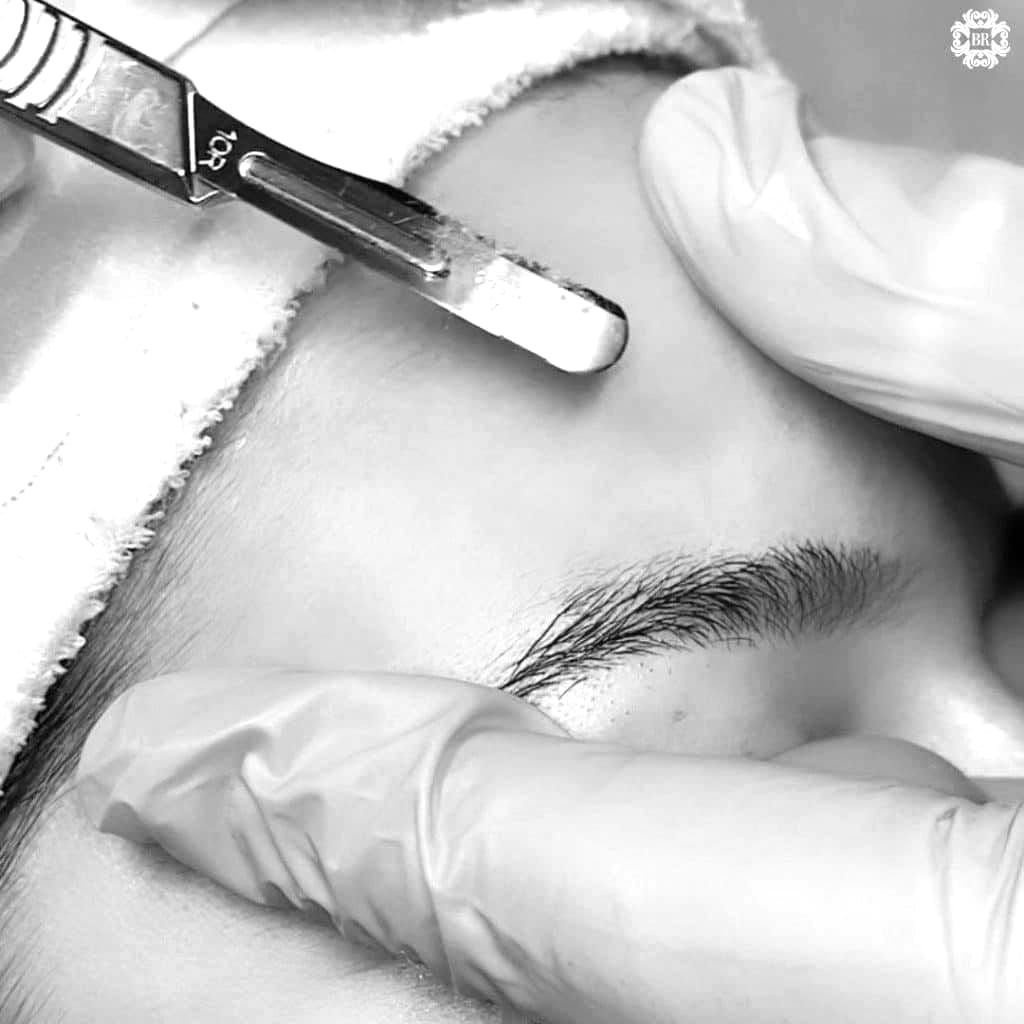
- FROM
- $175 — see the full spa menu
- TREATMENT
- Dermaplaning
- DURATION
- 30 minutes
- DEPTH
- Surface — stratum corneum only
- DOWNTIME
- None
- TREATS
- Dull texture, vellus hair, product absorption, flaky patches
- SAFE FOR
- Pregnancy-safe · suited to sensitive skin · not for active acne breakouts
What actually happens
We hold a sterile surgical blade at a shallow angle against the skin. Short, controlled strokes move it across the face.
Each stroke lifts away the outer layer of dead skin cells. It also removes the fine vellus hair — the soft, colorless hair some call peach fuzz.
One pass does it, with no chemical exfoliant and no device involved. This is mechanical exfoliation in the most literal sense: material is removed, not dissolved.
What it feels like
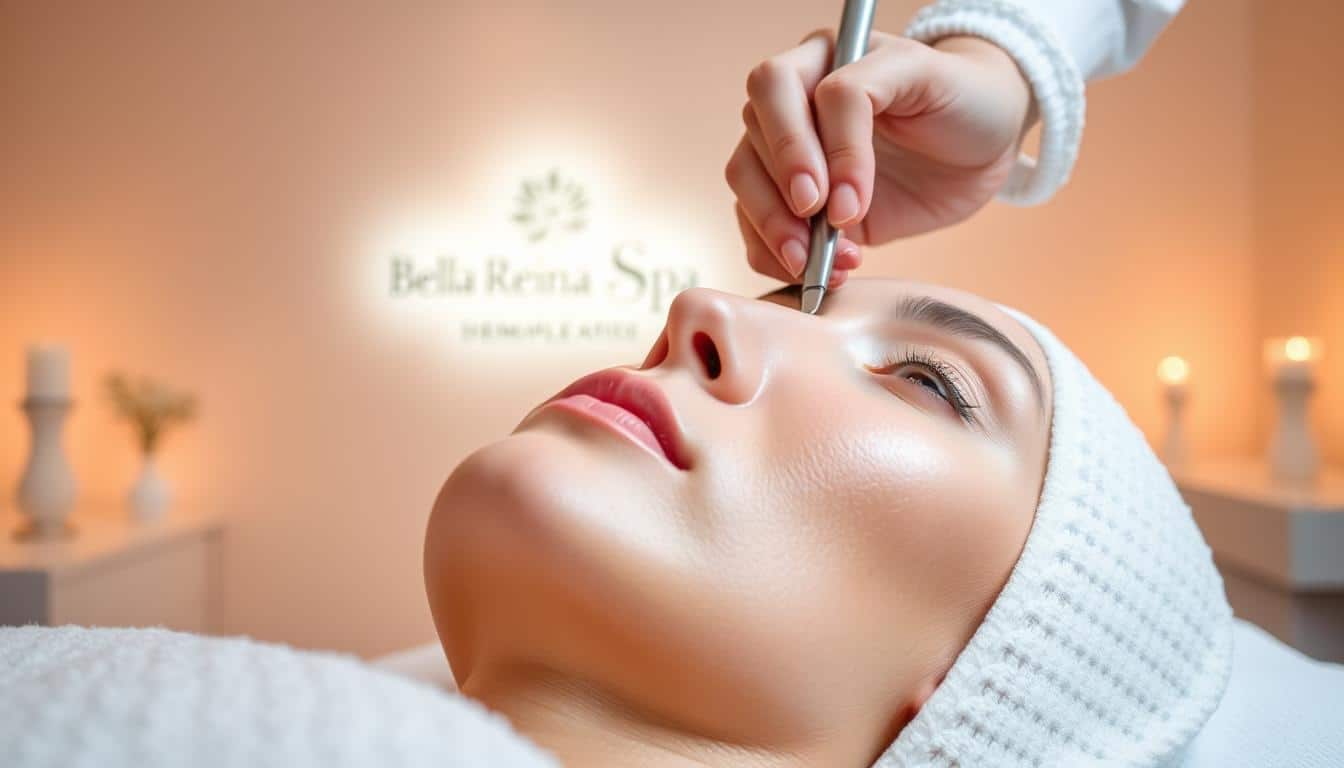
It does not hurt, and there is no cut. What you feel is a light scraping, closest to a soft toothbrush drawn over the skin, with a faint tug where the fuzz lifts.
Your skin is held taut with one hand so the blade cannot skid. We run one test stroke along the jaw before the full pass.
If the skin objects to that, we stop and change the plan. We do not work over active breakouts or inflamed skin.
Plain blade pass, or the six-step version
Two things carry this name here. The plain pass is the blade and nothing else.
The house version wraps five more steps around it: an enzyme peel, extractions where the skin needs them, and NAD+ serums chosen to help tired skin look brighter. Ask which one you are booked for when you call, because they are not the same appointment.
Most clients come back every three to four weeks, the pace skin renews itself.
One test stroke along the jaw before the full pass — if the skin objects, we stop and change the plan.
Common questions
Does the hair grow back thicker after dermaplaning?
No. The fine vellus hair grows back at its normal rate and texture. Shaving skin does not change the hair follicle itself. The thicker-hair idea is a common myth about this treatment.
Is dermaplaning safe during pregnancy?
Yes. Dermaplaning uses no chemicals and no devices. That makes it one of the treatments considered appropriate during pregnancy. Mention it at intake so we can confirm it fits your situation.
Can I wear makeup right after?
Yes. There is no redness to wait out and no product left on the skin to work around. Makeup goes on the same day, and it sits noticeably flatter than it did before.
How does dermaplaning compare to microdermabrasion?
Both exfoliate without acid. Dermaplaning uses a blade and also removes fine facial hair. Microdermabrasion here uses an actuator that gently exfoliates and shakes dead skin loose, and it reaches around the nose where a blade does not. Both work at the surface.
How often should I book dermaplaning?
Every three to four weeks is typical. That roughly matches the skin's natural cell turnover cycle. We may suggest a different interval for your skin type.
Your first Skin Read is on us.
The Skin Read consultation ($70) and a full Brow Wow wax and shape ($30) — a $100 experience, free for new clients. We look at your skin, tell you what it needs and what it doesn’t, and nothing is treated that day unless you want it to be.
- Rated 5 out of 5
I had a facial and dermaplane with Ebony and it was one of the best facials I've ever had. Already booked another appointment with her for the future. Highly recommend!